Show Up on May 11 for the "State of Public Education"
How to Give Public Comment on Texas Education to the House Public Education Committee

What:
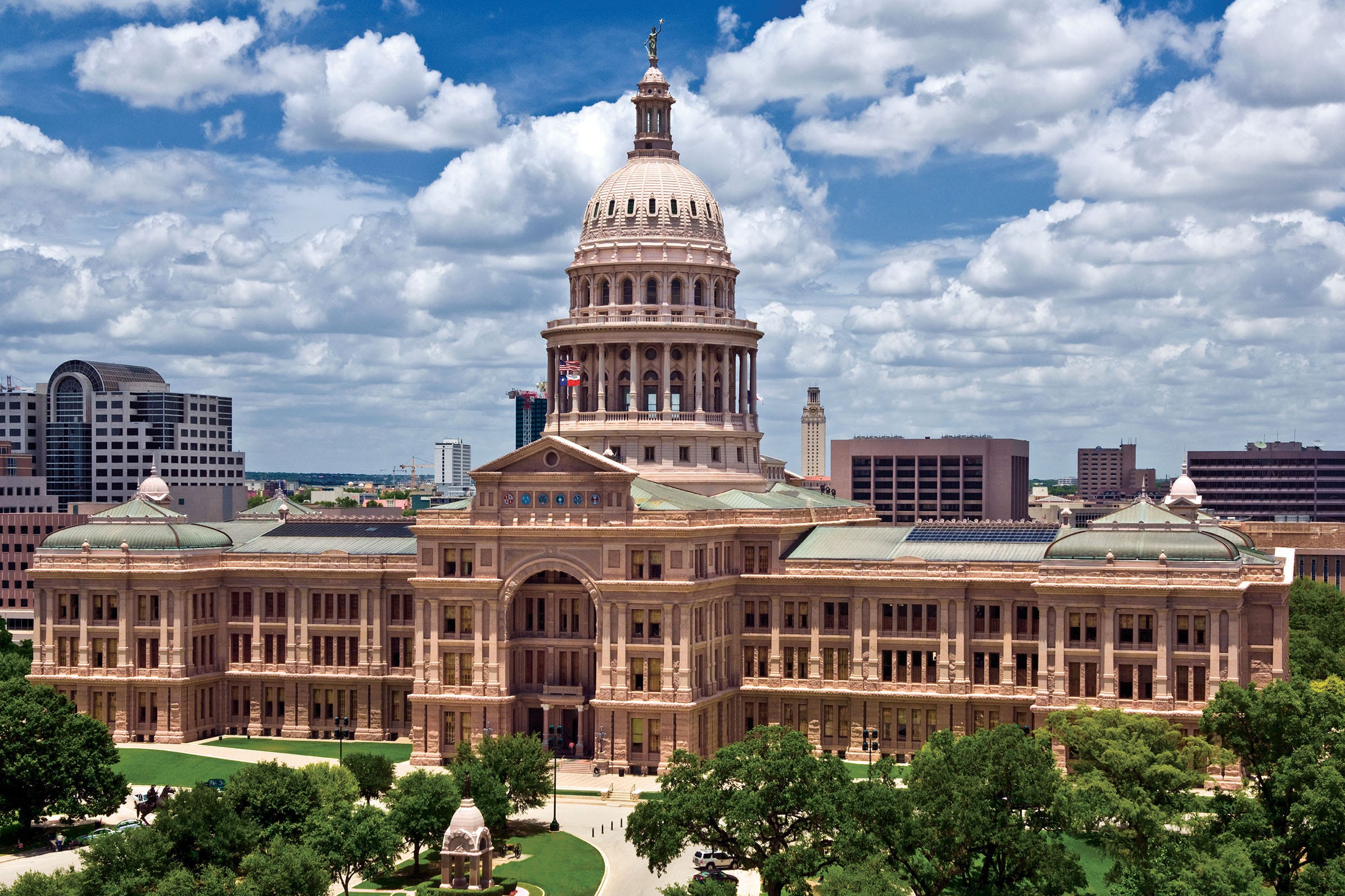
The Texas House Public Education is holding a committee hearing on May 11 at 10 am in JHR 140 about the “State of Public Education.”
Why:
The charge of the committee hearing: “Study the current state of public education in Texas. . . Identify emerging challenges, opportunities, and best practices to sustain and expand high-performing schools across Texas.”
What you can do:
You must be physically present at the Texas Capitol and use the paperless House Witness Registration system on a computer kiosk in the Extension (levels 1 or 2) or on your mobile device via the Public-Capitol Wi-Fi. Registration typically opens 30–60 minutes before the hearing begins.
If you cannot come in person, you can still submit concerns to the public record. On the form, select:
Public Education May 11, 2026 - 10:00 AM [JHR 140] “State of Education”
What to share?
The action steps the Public Education Committee should take:
Investigate conflicts of interest in the standards development process. The legislature should investigate whether the SBOE’s content advisor selection process was compromised by undisclosed financial relationships. Dr. Don Frazier, a lead content advisor on these standards, accepted $70,000 through his Texas Center at Schreiner University from the Texas Public Policy Foundation (TPPF) in 2024 to write social studies TEKS. Texans deserve to know whether the curriculum their children will be required to learn was designed by advisors working in the public interest or in the interest of ideologically motivated funders. The legislature should require full financial disclosure from all SBOE content advisors and refer the matter to the appropriate oversight body if conflicts are confirmed.
Slow the process. Direct the SBOE to pause final adoption and convene a new work group of vetted classroom teachers, curriculum coordinators, and university-level content experts to conduct a full review of the proposed standards for accuracy, vertical alignment, and developmental appropriateness before any vote proceeds.
Require a fiscal impact analysis. Before adoption, the legislature should require TEA to produce a full accounting of implementation costs — curriculum materials, professional development, and projected teacher attrition and replacement — so districts can plan and taxpayers are informed of costs.
Require transparency in the development process. The legislature should demand a full accounting of who was involved in drafting these standards, what research was cited and how, and why the input of classroom educators and content experts was subordinated to a small group of politically appointed advisors.
Mandate a comparative standards review. Require TEA to create a crosswalk comparing current and proposed TEKS — at the skill and concept level, not just the strand level — so gaps in geography, civics, economics, and historical coverage are documented on the public record before adoption.
Talking points to support the action steps:
Content Issues
Texas’s proposed social studies TEKS framework represent a radical restructuring of K–12 curriculum
Critically, the research cited to justify the new K–8 “chronological” framework does not support the claims made by the SBOE and TEA. In effect, it is a massive experiment on K-12 students without any evidence to support their claims that student achievement will improve.
The proposed K–8 framework is not designed to build foundational skills or spiral content so students revisit concepts with increasing depth over time, a core feature of high-performing curricula.
The framework introduces overly complex material at earlier grade levels, misaligned with established child development research on what students are cognitively ready to learn.
The shift to a primarily chronological history sequence crowds out foundational instruction in geography, economics, and civics, the three disciplines that make history legible and interesting to students.
Content overload and minimization of critical skills:
The proposed social studies TEKS introduce overloaded history content (a net increase in people and events to identify and memorize) while eliminating foundational skills in geography, economics, and civics.
Geographic skills: In grade K-5, The proposed standards represent roughly a 90% reduction in geography as a discipline compared to current K–5 TEKS. What remains is a single skill: locating places on a map with adult assistance. Concepts like human modifications on the environment, conservation, and features of a map, are gone. The ability to read and interpret maps and understand how humans interact with the environment are abilities that affect students’ literacy.
Civics skills: Key civics concepts disappear or are drastically minimized from the K–8 sequence: how amendments are made to the Constitution, consent of the governed, due process. Freedom of speech is named once, in 2nd grade, and not explicitly addressed again in the entire K–12 sequence. In high school, student understanding of civics is severely narrowed. Students will learn considerably less in U.S. history and especially U.S. Government about citizen movements to bring about political change, factors that influence an individual’s political attitudes and actions, or the media’s role in the political process. At no point in K-12 would students learn about the origins of political parties and the two-party system. The proposed standards treat founding documents as historical artifacts and patriotic symbols while removing the expectation that students understand what those documents protect and why. Students will know the Constitution exists. They will not be required to know what it actually does.
Economics skills: Elementary students will receive no instruction on supply and demand, a concept currently taught in grades 3, 4, and 5. Instruction on how people make and earn money, currently in grades 2 and 3, is eliminated. In high school, free enterprise is framed in a consistently positive light. Students will lack a meaningful understanding of how capitalism actually works, because the standards are consistently written to highlight the benefits of free enterprise and downplay the problems. Describing postwar prosperity as stemming from the free enterprise system, for instance, rather than the specific policy mix of the GI Bill, federal highway spending, and mortgage subsidies. In the U.S. government course, the government’s role in creating fiscal and monetary policy is completely eliminated.
Biased or minimized portrayals of groups in history:
The proposed social studies TEKS presents a biased view of history by minimizing or eliminating the contributions of groups including women, minority groups, and non-Western cultures.
In 11th grade U.S. history, students still learn about the Civil Rights movement, but any aspects of opposition the Civil Rights reformers faced, such as violence, assassinations, political opposition by southern governors and lawmakers, is removed. Any reference to women’s rights movements after the 19th amendment are eliminated, as is the American Indian Movement. There are substantially fewer African American, Latino American, American Indian, and female leaders named.
High School World history is now becoming a western civilization course, as explicitly stated in the introduction: “Rooted in the Western tradition and reflected in core American values. This course consists of a high-level overview of world history with a special emphasis on the western and American tradition.”
Religious bias:
The proposed social studies TEKS frame Christianity exclusively in a positive light, which is neither historically accurate nor religiously balanced, while other faith traditions are downplayed or cast in an unfavorable light.
Islam is portrayed through conquest and terrorism. For example, this standard in 10th grade World history, “describe the teachings of jihad and how they led to the expansion of Islam and the conquest of Christian lands.” It also describes, “enslavement and the slave trade carried out by Muslim raiders,” an inaccurate portrayal of the slave trade.
Students learn nothing about Hinduism or Buddhism until World History in 10th grade (even though the new framework has world history referenced in grades 3-8), and in that course they get one standard on Hinduism, two on Buddhism, and no standards on Sikhism. In contrast, Christianity is referenced in almost every grade starting in Kindergarten.
Implementation and Process issues
Politically motivated process:
The TEKS were developed through a rushed process dominated by politically appointed advisors rather than classroom educators and content experts.
There are serious concerns about the role the right-leaning think tank Texas Public Policy Foundation played in the creation of these TEKS. A representative from TPPF came and testified multiple times at the SBOE, and one time he expressed (inadvertently, apparently)that they had been actively involved in the process, to the extent that Member Brooks directly asked him what role TPPF played (and of course he then walked it back). In the April 2026 SBOE meeting, Member Perez Diaz raised the concern about a 2024 tax return showing that Content Advisor Don Frazier’s Texas Center at Schreiner University was paid $70,000 to “write social studies TEKS.” She was consistently shut down by the Republican members of the Board when she tried to get answers about the implications of the tax return. Frazier and TPPF have still not explained what, exactly, the money was used to create.
Lack of vetting and quality control:
The State Board has not done the due diligence needed to identify gaps, verify vertical alignment, or confirm factual accuracy, meaning teachers will be handed standards that are in some cases unclear or incorrect, undermining their ability to deliver effective instruction.
These gaps are the result of a rushed process that did not take the time to compare current standards to proposed standards. How many more errors or gaps will be revealed AFTER these TEKS are passed, because the SBOE is in a mad dash to approve these by June, without taking the time to review. This is also the result of a process that prioritized the input of a small group of politically appointed content advisors over a transparent and rigorous, months-long approach involving educators and content-area experts.
Content advisors were tasked with writing the key topics and subtopics that directly shaped the final standards and had five months to do it. Classroom teachers and content experts, by contrast, had a combined four days of direct input. In the intervals between those sessions, advisors submitted extensive recommendations that repeatedly reshaped what educators had produced.
Recent TEKS revisions in other subject areas have typically allocated at least a year to the process, with educator work groups empowered to write the standards themselves. This time, content advisors didn’t advise, they wrote.
Deprofessionalization and the teacher retention crisis
Teachers may choose to leave the profession rather than master and implement an entirely unfamiliar content framework. The state has yet to disclose what it will cost districts to adopt new materials, retrain teachers, or replace those who leave rather than absorb an entirely unfamiliar content framework.
Requiring a huge shift in the content teachers are teaching will have a direct impcaat on student achievement, as it will take teachers several years to build content knowledge in a course they are not as familiar with. A substantial body of research, including foundational work by Deborah Ball and colleagues on pedagogical content knowledge, demonstrates that teachers with stronger subject-matter knowledge produce greater student learning gains. When content is new to the teacher, instruction tends toward surface-level delivery and avoidance of complex material. The effect is compounded in social studies, where discussion and analysis are central to the discipline.
Unknown Costs
Replacing a single teacher costs a district $10,000 to over $25,000, with larger districts spending an estimated $24,930 per vacancy when separation, recruitment, training, and lost productivity are accounted for. If teachers do leave the profession or retire early, rather than implement TEKS they do not support, it will cost districts. Sources: Learning Policy Institute (2024); EdElements; NYSSBA (2025)
No financial analysis of this TEKS rewrite has been conducted, despite its radical departure from commonly accepted social studies practice and the significant implementation work it will require.
While we don’t know how much this rewrite will cost Texas districts, we do know what it cost in California when the state recently created new standards. For example, San Francisco’s projected five-year cost for new social studies materials is $7 million. When California adopted Common Core, its state legislature determined that $340 million was spent on curricular materials and $371 million was spent on staff development. Texas is a much larger state.
A State Board member has bluntly said they are not concerned about the costs of this adoption, because these costs will be borne by local districts. Texas districts are increasingly struggling to make ends meet even now, as many districts are closing schools and cutting teacher staff. There is no stated plan for how the state will support local districts with this intensive work and cost.
The total cost of implementing this framework in Texas, including new materials, professional development, and attrition-driven vacancies, has not been disclosed. This committee should require a fiscal impact estimate before adoption proceeds. Districts cannot plan for a cost the state has not calculated.
May I use some of these talking points in my public comments? Of course I will cite my source. Thanks.
Thank you for this thoughtful analysis. I knew it was bad but wow, this is so much worse than I realized!